


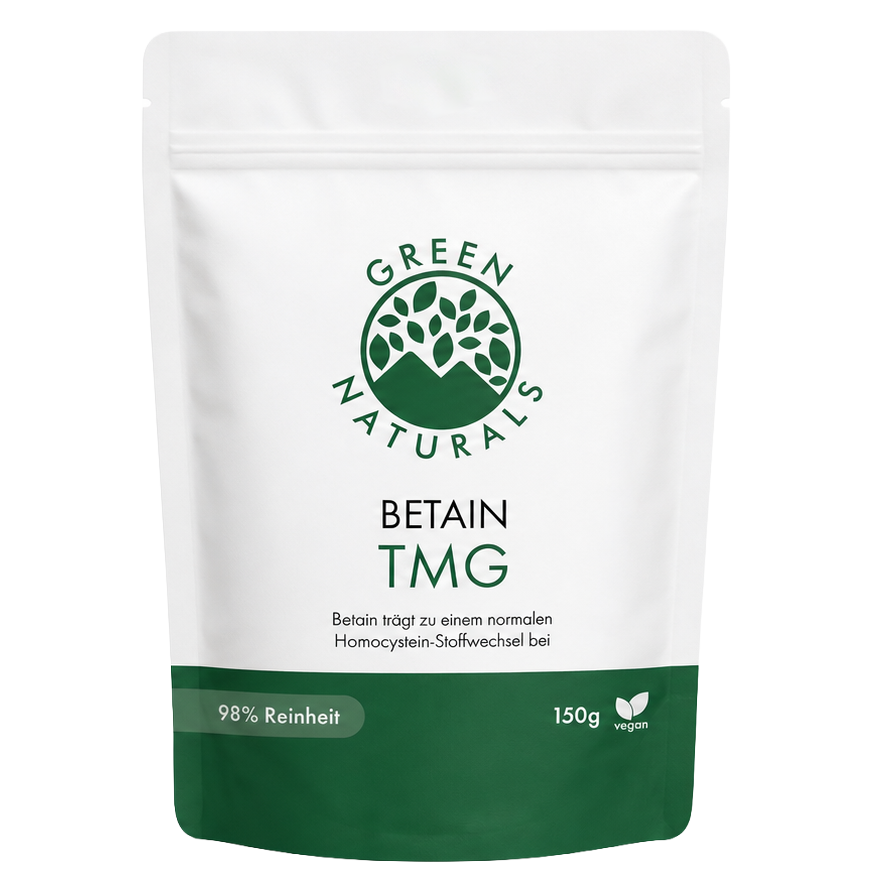
Betaine TMG Powder - 2352 mg Trimethylglycine, 98% Purity | 150 g
Betaine TMG Powder - 2352 mg Trimethylglycine, 98% Purity | 150 g
Betaine TMG Powder - pure betaine anhydrous (trimethylglycine) with 98% purity at a study-based dose.
- 2352 mg pure betaine (TMG) per daily dose (= 1 level scoop of 2.4 g betaine anhydrous)
- Authorised EFSA claim: betaine contributes to normal homocysteine metabolism - the beneficial effect is obtained with a daily intake of 1.5 g
- 98% purity - pure betaine anhydrous, no diluted powder, no carriers
- Pure powder instead of capsules - no capsule shell, vegan, gluten-free, lactose-free
- Lab-tested premium quality - every batch independently controlled, made in Austria
- 150 g = 63 daily servings

Want to save more?
Choose a bundle and save more!
Couldn't load pickup availability
30-day returns, SSL-secured checkout

Betaine (trimethylglycine) - named after the sugar beet
- Betaine (trimethylglycine, TMG) is a natural amino acid derivative that was first isolated from the sugar beet (Beta vulgaris), which gave it its name. It also occurs in spinach, quinoa and whole grains.
- Chemically, betaine is a triple-methylated glycine - in metabolism it acts as a methyl group donor and as an osmolyte that regulates cellular water balance (Craig, 2004).
- As a methyl group donor, betaine is directly involved in homocysteine metabolism - an authorised EFSA health claim exists for this.
98% purity - pure betaine anhydrous instead of diluted blends
- Green Naturals Betaine TMG contains pure betaine anhydrous with 98% purity - compared to many manufacturers that use diluted powders with carriers and fillers.
- As a powder without a capsule shell, the formula consists of exactly one ingredient - compared to many suppliers whose capsule products contain several excipients per serving.
- Betaine is one of the best-studied supplement ingredients: the daily dose of 2352 mg is close to the 2.5 g used in randomised studies (Cholewa et al., 2013) and well above the EFSA effect threshold of 1.5 g.
With an authorised EFSA claim - substantiated benefits
- Betaine contributes to normal homocysteine metabolism (authorised EFSA claim) - the beneficial effect is obtained with a daily intake of 1.5 g of betaine; our daily dose provides 2352 mg of pure trimethylglycine.
- Transparency matters: in some people, an intake of more than 4 g of betaine per day can increase cholesterol levels - our dosage deliberately stays well below this.
- 150 g of powder lasts for 63 daily servings - simply dissolve 1 level scoop (2.4 g) in water each day.

-

Optimal time of intake
Betaine TMG can be taken at any time of day. Dissolve 1 level scoop (2.4 g) in water - ideally with a meal. Regular daily intake is what matters.
-

Dosage and duration of use
Daily dose: 2.4 g of powder (= 1 level scoop = 2352 mg of pure betaine). The beneficial effect on homocysteine metabolism is obtained with a daily intake of 1.5 g of betaine. Do not exceed the recommended daily dose. The 150 g pack lasts for approx. 63 days. For adults only; during pregnancy, breastfeeding or when taking medication, please consult your pharmacist.


| Quality criterion | Green Naturals® | Other manufacturers |
|---|---|---|
| Raw material & purity | ✔ pure betaine anhydrous (trimethylglycine), 98% purity | ✕ |
| Form | ✔ pure powder without capsule shell, just one ingredient | ✕ |
| Sensible dosage | ✔ 2352 mg per daily dose, above the EFSA effect threshold of 1.5 g | ✕ |
| Substantiated benefit (EFSA) | ✔ authorised claim: normal homocysteine metabolism | ✕ |
| Purity & safety | ✔ every batch independently lab-tested, made in Austria | ✕ |
| Formula & tolerability | ✔ vegan, gluten-free, lactose-free, no additives | ✕ |
| Transparency & responsibility | ✔ clear advice incl. the 4 g upper limit | ✕ |
| Practicality | ✔ 1 scoop daily, 150 g = 63 daily servings | ✕ |
Our vision at Green Label® is to create products based on purity and transparency. Our approach is to source high-quality raw materials directly from leading producers worldwide to offer a product that is uncompromisingly committed to natural ingredients. Every capsule of our products carries the promise of purity, sustainability, and maximum effectiveness:
- Premium active ingredients as pure substances, directly from leading producers.
- Production and bottling under the highest pharmaceutical standards (GMP, ISO 22000:2018, HACCP).
- Maximum avoidance of all additives; only valuable natural substances are used.
- Vegan capsule shells, 100% free of PEG and other undesirable substances.
- Packaging in environmentally friendly, non-toxic materials for optimal aroma protection.
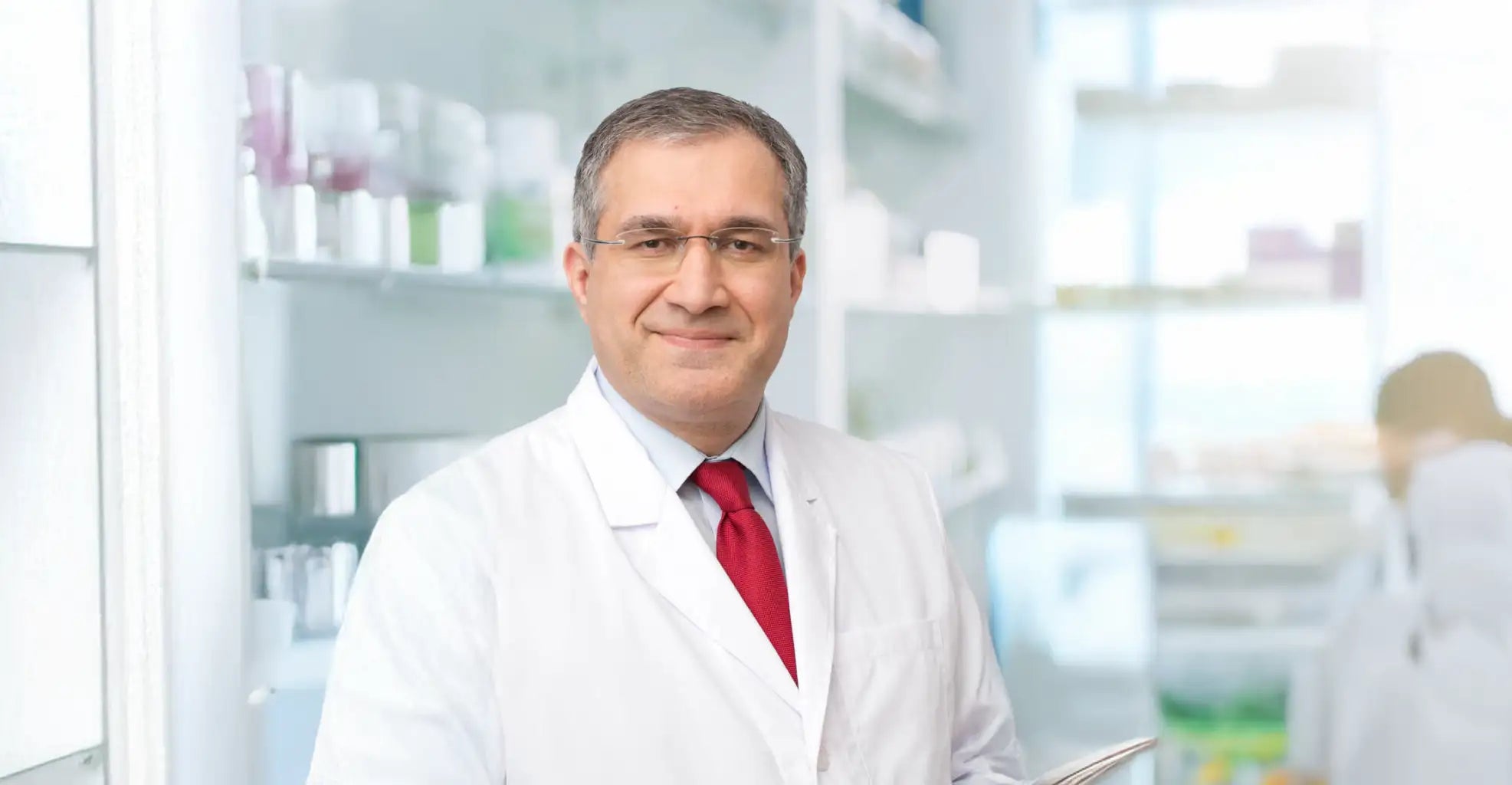
My name is Dr. Hari Sven Krishnan, founder of Heilpflanzenwohl GmbH and chief pharmacist.
Together with an experienced team of specialists, including Stephan Walz (pharmacist), Marie Schröder (nutritional scientist), and Dr. Christiane Gras (immunologist), we developed Green Naturals.
The result of intensive research with a clear goal: to offer you natural, highly effective products. At Heilpflanzenwohl, quality and purity come first, because we are convinced: "The best medicine comes from nature – we just need to learn how to use it correctly."

What is betaine?
What is TMG?
What is betaine good for?
When should you take TMG betaine?
What is betaine HCl?
What is the dosage of Betaine TMG?
Does betaine have side effects?
Why powder instead of capsules?
Is the product completely natural?
Can you take Betaine TMG long-term?
Is the product available in pharmacies?
How should I store Betaine TMG?
Discover our top sellers
-
DAO (diamine oxidase)
High-dose herbal DAO (diamine oxidase) with 100,000 HDU per capsule from pea sprout powder. Our DAO capsules provide the body with the enzyme diamine oxidase, which supports histamine breakdown.
39,95 €79,90 €119,85 €75,92 €107,89 €37,95 €72,12 €102,49 €107,97 € 102,57 € 97,17 € 102,57 € 97,44 € 92,31 € per 100gRegular price 39,95 €Regular priceUnit price 107,97 € per 100g -
Shilajit ultra-high dose (2000 mg)
Ultra-high-dose premium 20:1 Shilajit extract (2,000 mg) with 1,000 mg fulvic acid and 240 mg humic acid per dose. Discover Shilajit, the "conqueror of mountains," as it has been praised for centuries in traditional Ayurveda, harvested from the heights of the Himalayas.
49,95 €99,90 €149,85 €94,92 €134,89 €47,45 €90,17 €128,14 €243,66 € 231,48 € 219,29 € 231,48 € 219,90 € 208,33 € per kgRegular price 49,95 €Regular priceUnit price 243,66 € per kg -
Spermidine Ultra Forte 6 mg
Ultra high-dose spermidine forte 6 mg per capsule. Our Spermidine forte is derived from high-quality wheat extract, which is carefully selected to ensure the purest and most effective form of spermidine.
59,95 €119,90 €179,85 €113,92 €161,89 €56,95 €108,22 €153,79 €124,90 € 118,66 € 112,41 € 118,66 € 112,72 € 106,79 € per 100gRegular price 59,95 €Regular priceUnit price 124,90 € per 100g -
Liposomal Magnesium
Bioavailable liposomal magnesium with 250 mg magnesium per daily dose. Green Naturals Liposomal Magnesium utilizes advanced liposomal technology to maximize the bioavailability of magnesium. This ensures that more magnesium can penetrate cell walls and be effectively utilized.
32,95 €65,90 €98,85 €62,62 €88,99 €31,30 €59,49 €84,54 €35,82 € 34,03 € 32,24 € 34,03 € 32,33 € 30,63 € per 100gRegular price 32,95 €Regular priceUnit price 35,82 € per 100g -
Glycine (2000 mg)
High-dose 2,000 mg premium glycine per daily serving (2 capsules). Glycine is an amino acid that plays an important role in the human body and is particularly utilized during active phases of life.
14,95 €29,90 €44,85 €28,42 €40,39 €14,20 €27,00 €38,37 €10,68 € 10,15 € 9,61 € 10,15 € 9,64 € 9,13 € per 100gRegular price 14,95 €Regular priceUnit price 10,68 € per 100g


Sources
- Craig, S.A.S. (2004). Betaine in human nutrition. The American Journal of Clinical Nutrition, 80(3), 539-549. DOI: 10.1093/ajcn/80.3.539
- Cholewa, J.M. et al. (2013). Effects of betaine on body composition, performance, and homocysteine thiolactone. Journal of the International Society of Sports Nutrition, 10, 39. DOI: 10.1186/1550-2783-10-39
- Lever, M. & Slow, S. (2010). The clinical significance of betaine, an osmolyte with a key role in methylation of homocysteine. Clinical Biochemistry, 43(9), 732-744. DOI: 10.1016/j.clinbiochem.2010.03.009
Remarks
- HACCP (Hazard Analysis and Critical Control Points) is a preventive system for ensuring food safety that identifies and assesses potential hazards in production and minimizes them through targeted control measures. The seal refers to the manufacturing process.
- This is how the grade is calculated: Grade calculation based on star ratings: 5.00 - 4.50 Very good, 4.49 - 3.50 Good, 3.49 - 2.50 Satisfactory, 2.49 - 1.50 Sufficient, 1.49 - 1.00 Poor. For the verification of ratings, no authenticity check of customer reviews is carried out. The ratings are combined from different sources, such as mail-order pharmacies and online marketplaces. Last updated: 13.10.26

